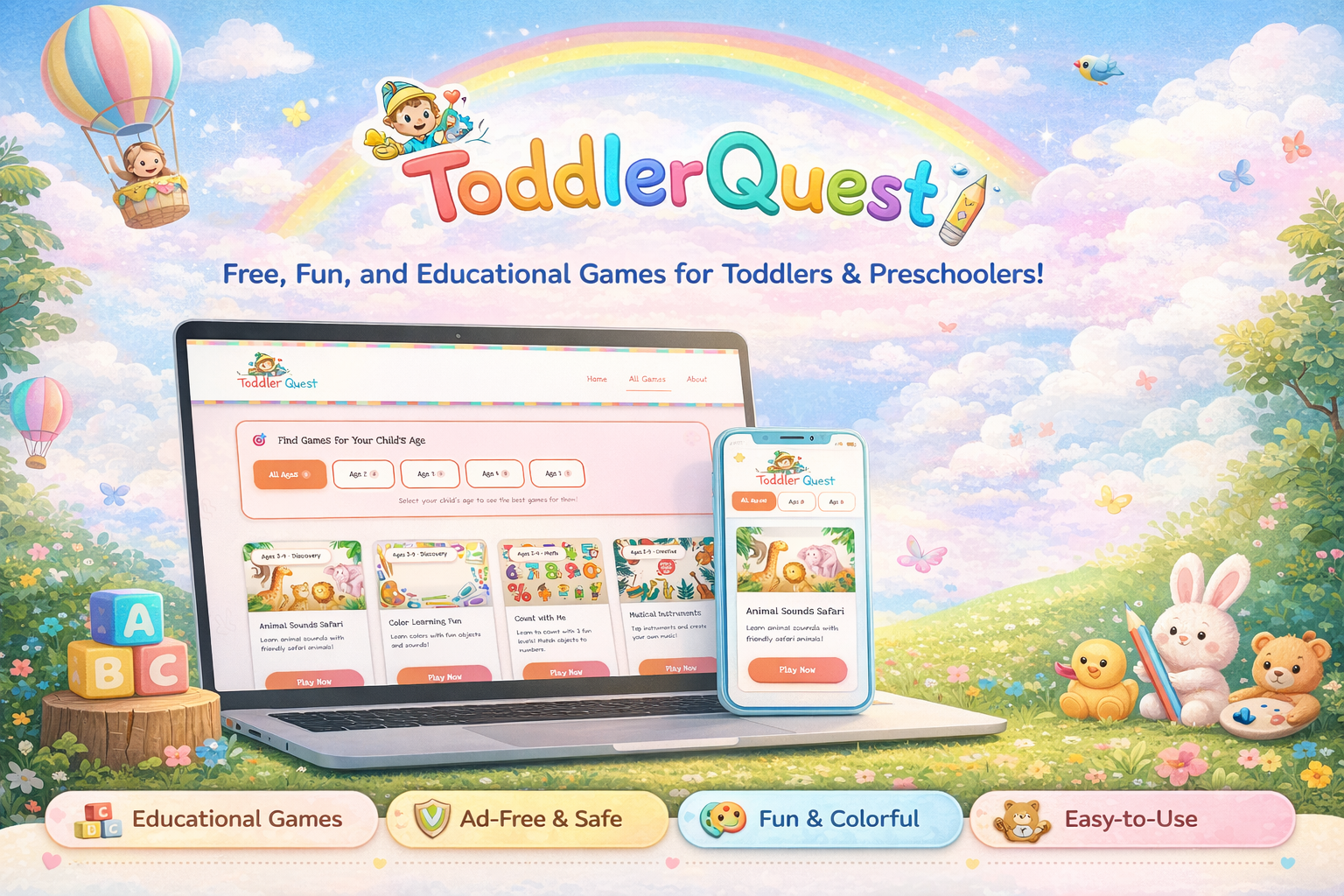
Safe screen time should not require a compromise.
Many free children’s apps interrupt learning with ads, require accounts, or use interfaces built for older children. ToddlerQuest began with a family observation: there was no free game site we felt completely comfortable putting in front of a toddler.
Our two-person product team paired early-childhood insight with interaction design and engineering to create a calmer alternative—no account, no advertising, and no data collection.
Ten small worlds, each with one clear idea.
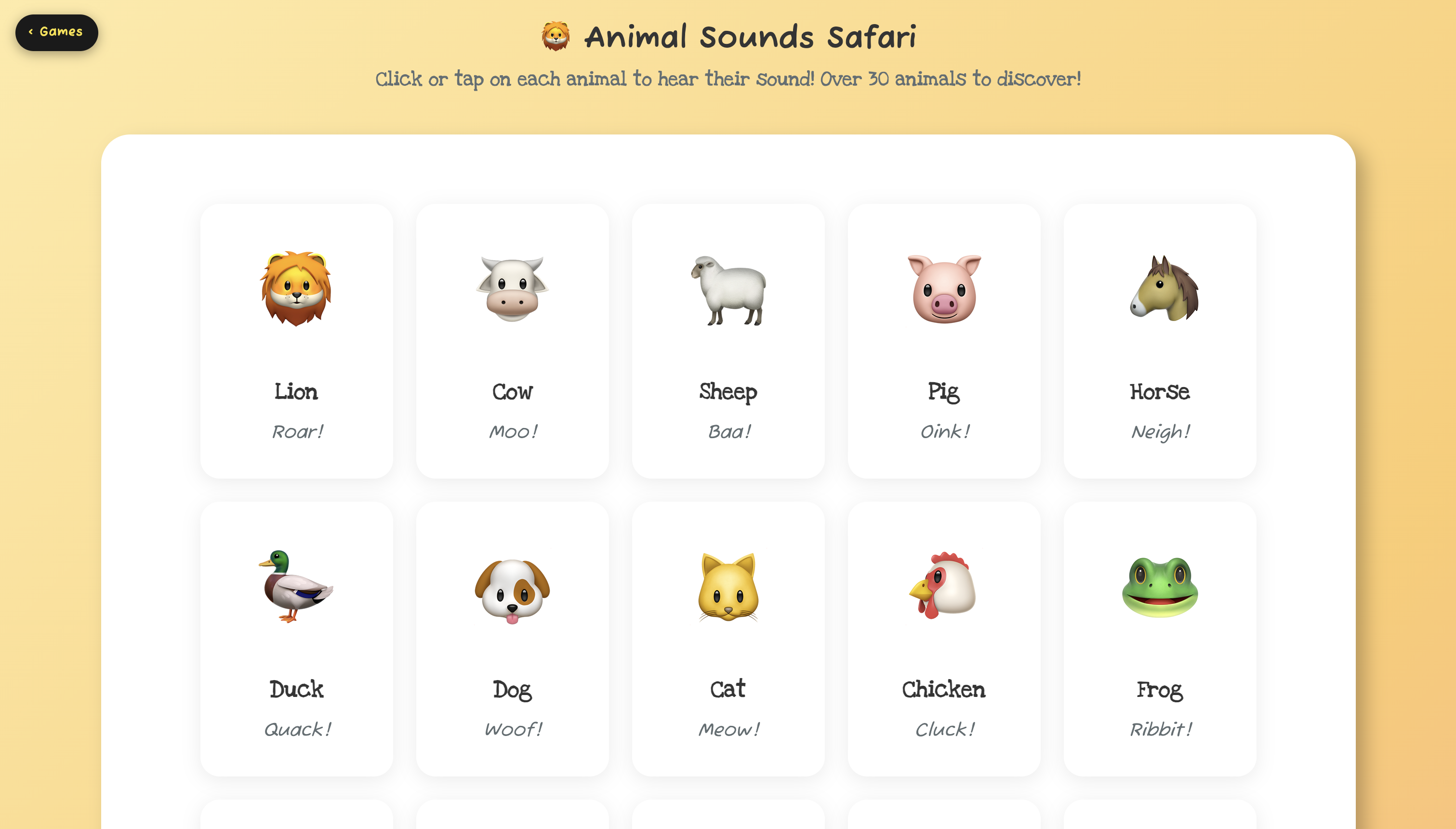
Self-contained games cover animals, sound, colors, counting, letters, shapes, music, and imaginative play. Large targets, immediate audio feedback, forgiving mechanics, and short sessions support children who cannot yet read or express frustration clearly.
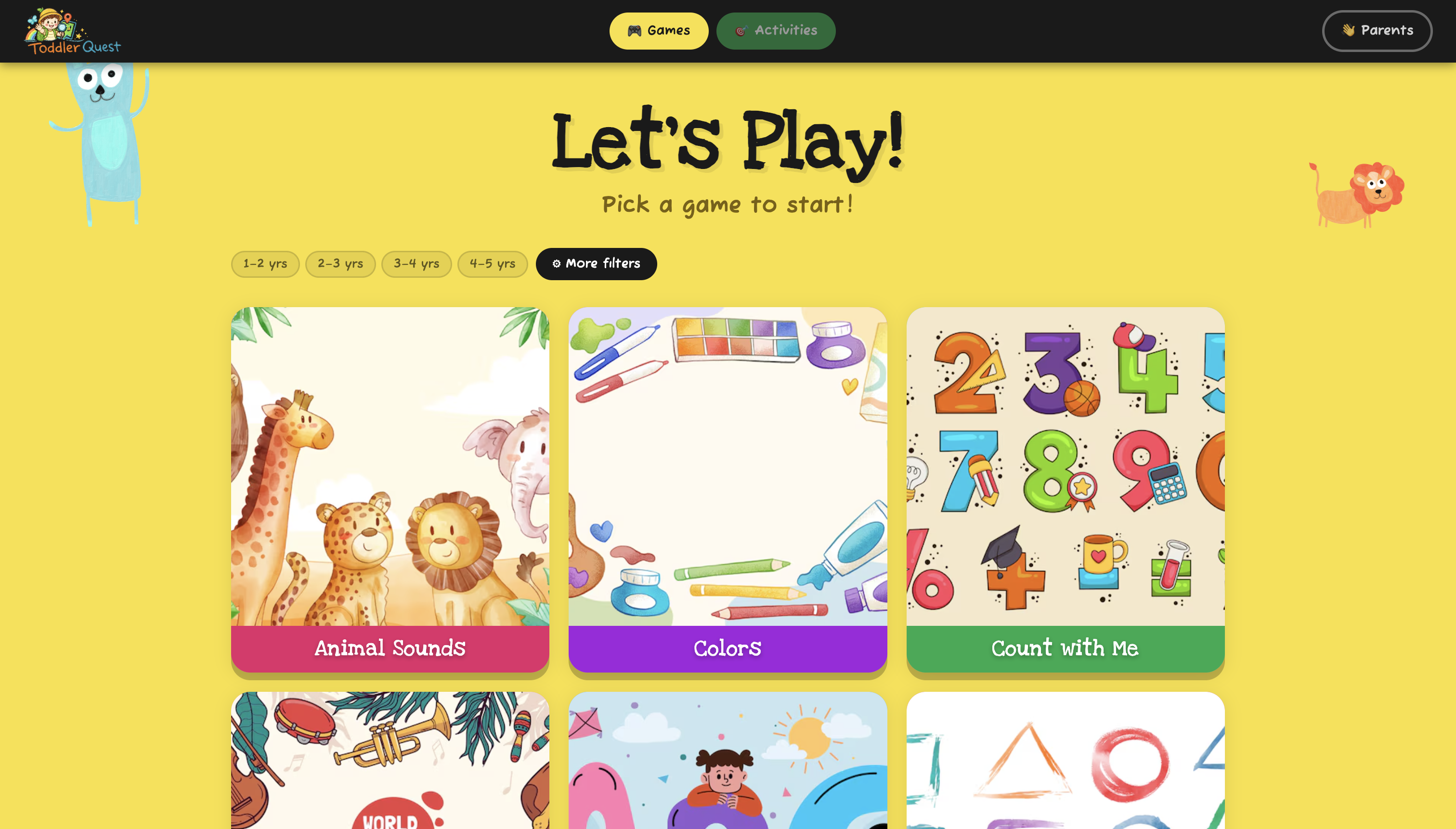
Real toddlers rewrote the homepage.
The original hero placed the games below the fold. Adults understood the convention; toddlers did not scroll. We reduced the introduction, surfaced game cards immediately, and softened the surrounding palette so the activities—not the interface—held attention.
The child plays. The parent stays confident.
Game descriptions explain what each activity teaches and who it suits. Sixteen offline activities—including sensory play, scavenger hunts, kitchen science, and downloadable coloring books—extend learning beyond the screen.
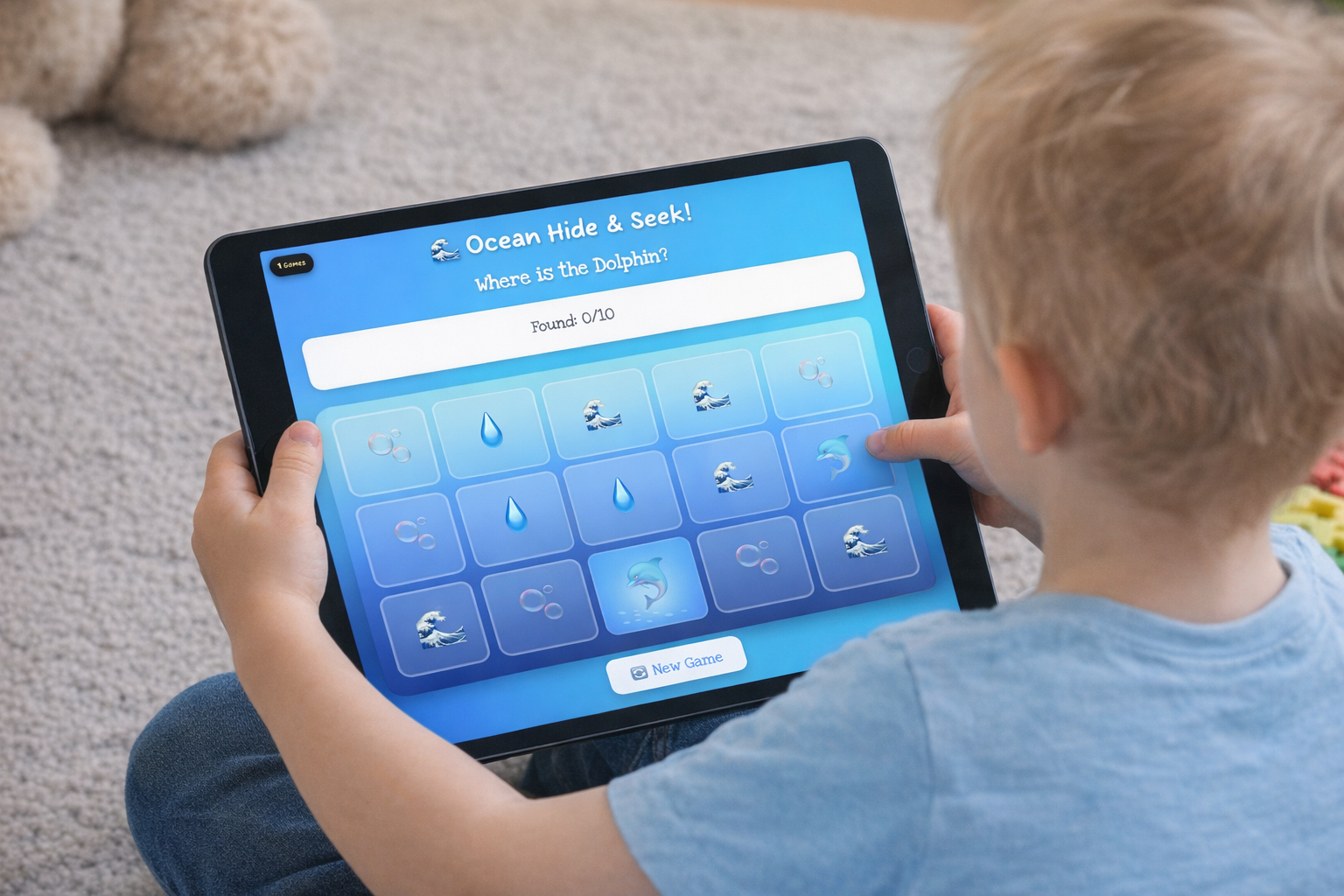
Private, accessible, and available everywhere.
Vanilla HTML, CSS, and JavaScript keep the platform fast and dependency-free. Semantic markup, keyboard navigation, reduced-motion support, high contrast, and responsive layouts make accessibility part of the product architecture.